
 Search
Industry News
Home / News / Industry News / How Does the DR.DEEP SOCKET WRENCH TOOL Master High-Torque Fastening in Recessed Mechanical Assemblies?

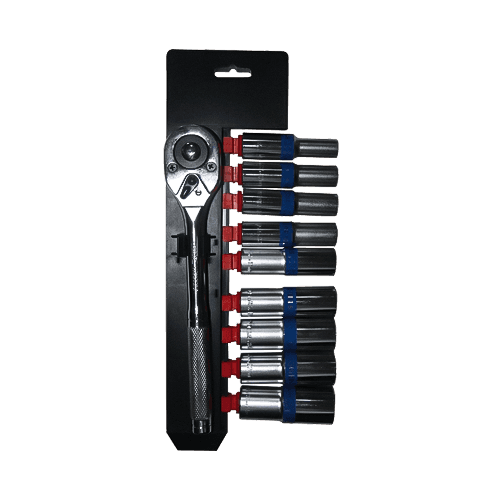
The reliability of a DR.DEEP SOCKET WRENCH TOOL is determined by its molecular integrity and its ability to distribute pressure evenly across the flats of a fastener.
Advanced Alloy Composition and Heat Treatment: The manufacturing process of a premium DR.DEEP SOCKET WRENCH TOOL begins with a rigorous heat-treatment cycle. Chrome Vanadium steel is the industry standard for manual hand tools due to its exceptional hardness and resistance to abrasion. For pneumatic or "impact" versions, Chrome Molybdenum is preferred because it is slightly more ductile, allowing the socket to absorb the rapid "hammering" force of an air tool without shattering. The quench-and-temper process ensures that the tool reaches a Rockwell hardness (HRC) level that balances strength with toughness. This prevents the socket walls from "stretching" or deforming when high-leverage breaker bars or torque wrenches are applied to the 1/2" or 3/4" drive end.
Thin-Wall Design vs. Structural Rigidity: A major challenge in engineering a DR.DEEP SOCKET WRENCH TOOL is maintaining a thin enough wall to fit into tight spaces while ensuring the metal does not fail under load. High-quality designs utilize a "cold-forged" process that aligns the grain structure of the steel with the shape of the tool. This allows for a reduced outer diameter (OD) without sacrificing burst strength. The internal corners of the drive end are often radiused rather than sharp; this "off-corner" loading technology shifts the stress away from the points of the fastener and onto the flat surfaces. This not only increases the torque capacity of the DR.DEEP SOCKET WRENCH TOOL but also significantly reduces the risk of rounding off the corners of expensive or critical bolts in aerospace and automotive engines.
Drive-End Precision and Torque Transfer: The square drive end (DR.) of the tool is engineered to tight tolerances to ensure a secure "lock" on the ratchet or extension bar. Most professional DR.DEEP SOCKET WRENCH TOOLS feature a ball-detent hole or a pin-hole (for impact use) to prevent the socket from accidentally detaching in deep engine bays or underwater assemblies. The precision of the square drive prevents "slop" or play in the tool string. If the connection is loose, kinetic energy is lost through vibration, and the risk of the tool slipping increases. By maintaining a 1:1 ratio of energy transfer from the handle to the bolt head, the DR.DEEP SOCKET WRENCH TOOL ensures that every pound-foot of torque applied by the technician is utilized effectively for fastening or extraction.
Standard sockets are often incapable of handling modern industrial fasteners, especially those involving long bolts or double-nutting configurations.
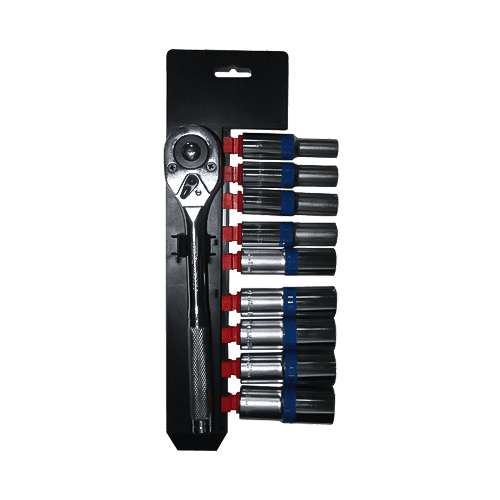
Managing Protruding Studs and Long-Bolt Clearances: The primary functional advantage of the DR.DEEP SOCKET WRENCH TOOL is its hollow internal cavity. In applications such as suspension strut replacement, manifold mounting, or structural steel bolting, the threaded portion of the bolt often extends far beyond the nut. A shallow socket would bottom out on the stud before reaching the nut's hex flats. The "Deep" architecture provides the necessary clearance to bypass the excess threading, allowing the tool to seat fully on the fastener. This full engagement is critical for safety; a partially seated socket is prone to slipping, which can cause injury to the operator and damage to the machinery.
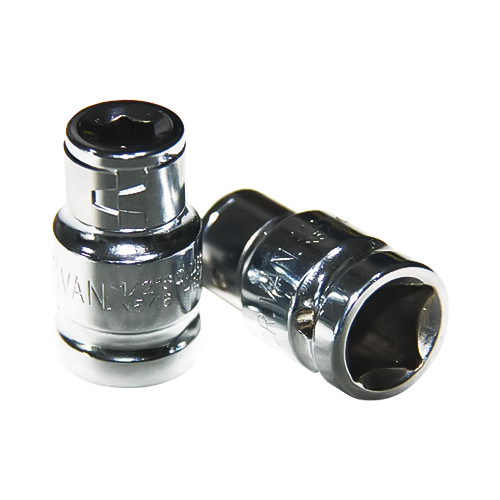
Accessibility in Recessed or Counter-Bored Holes: Many industrial designs hide fasteners within counter-bored holes to save space or for aesthetic reasons. The elongated body of the DR.DEEP SOCKET WRENCH TOOL acts as its own extension, allowing it to reach into these recessed areas where a standard socket combined with an extension bar might be too bulky or unstable. The knurled surface often found on the base of the socket provides a "finger-grip" area, allowing technicians to rapidly spin the fastener by hand during the initial threading phase. This is particularly useful in oil and gas refineries where workers often operate in awkward positions and need a tool that offers both reach and tactile control.
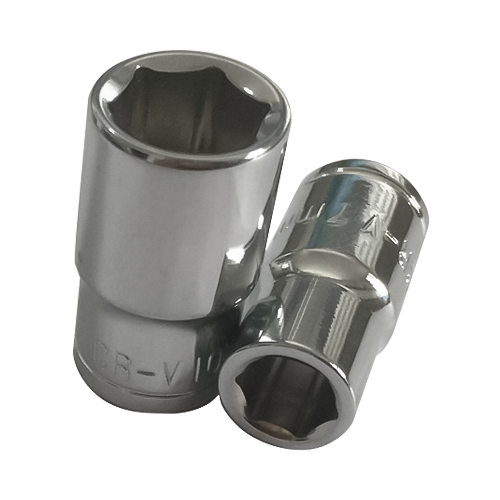
Internal Broaching and Multi-Point Versatility: The internal "broach" or the shaped hole of the DR.DEEP SOCKET WRENCH TOOL is available in various configurations to suit different fastener types. The 6-point (hex) version is the most common for heavy-duty work as it offers maximum contact area and reduces the chance of slippage on rusted bolts. However, the 12-point (bi-hex) version is essential for applications with limited "swing" room, as it allows the socket to engage the bolt at twice as many angles. High-precision broaching ensures that the internal dimensions are consistent across the entire depth of the tool, preventing the socket from getting "wedged" or stuck on a fastener that may have slight manufacturing variations or corrosion buildup.
Industrial tools are subjected to moisture, corrosive chemicals, and physical abuse. Maintaining a DR.DEEP SOCKET WRENCH TOOL requires attention to surface protection and structural inspection.
Surface Treatment and Corrosion Resistance: To prevent rust and oxidation, a DR.DEEP SOCKET WRENCH TOOL typically features a premium surface finish. Hand-operated sockets are usually "Mirror Polished Chrome," which provides a smooth surface that is easy to wipe clean of oil and grease. This finish also acts as a hard barrier against atmospheric moisture. For impact-rated tools, a "Black Phosphate" or "Black Oxide" finish is used. This chemical conversion coating is porous enough to hold a thin layer of oil, providing excellent rust protection while avoiding the "chipping" that can occur with chrome plating under the high-vibration environment of an impact wrench. Keeping these finishes intact is the first line of defense in preserving the tool's structural life.
Inspection for Metal Fatigue and Drive Deformation: Even the highest quality DR.DEEP SOCKET WRENCH TOOL is not indestructible. Regular inspection is mandatory in safety-critical industries like aviation or nuclear power. Technicians should look for "hairline cracks" around the drive square or the hex opening, which are early signs of metal fatigue. If a socket has been over-torqued beyond its rated capacity, the internal hex may show signs of "spreading." Using a socket that has begun to deform will lead to fastener damage. Additionally, ensuring that the internal cavity is free of debris—such as metal shavings or dried grease—is essential, as any buildup can prevent the socket from seating fully, leading to inefficient torque transfer and potential failure.
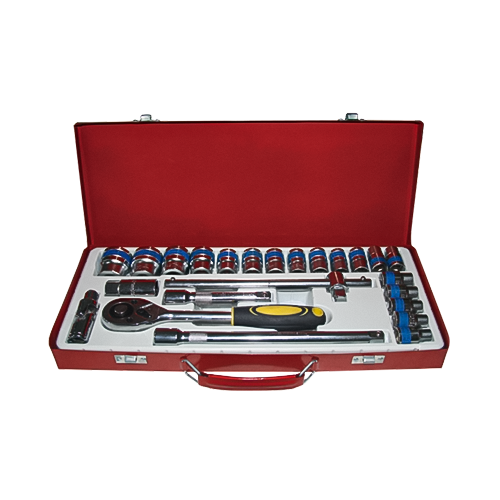
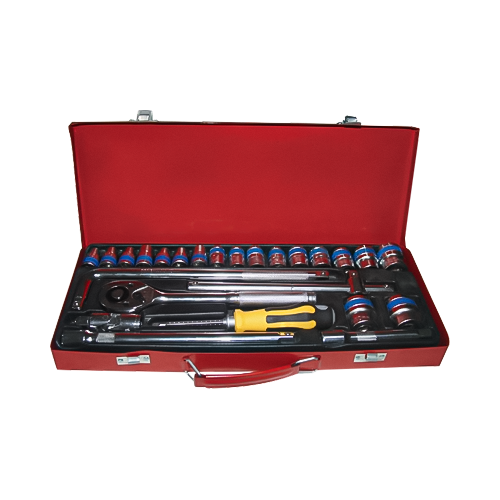
Proper Storage and Lubrication Standards: When not in use, DR.DEEP SOCKET WRENCH TOOLS should be stored on socket rails or in dedicated foam-lined trays. This prevents the tools from banging against one another, which can cause small nicks or burrs that eventually become stress-concentration points. For impact sockets, a light film of anti-corrosion oil should be maintained on the black phosphate surface. Furthermore, matching the tool to the correct drive size is crucial; using a 1/2" DR. socket with a 1/2" to 3/4" adapter to apply massive leverage is a leading cause of tool breakage. By adhering to the manufacturer's specified torque limits and keeping the tools clean and dry, a professional-grade deep socket can provide a lifetime of reliable service in the most demanding mechanical environments.
 +86 137 360 111 56
 Lianxing Village, Dongguan Street, Shangyu District, Shaoxing City, Zhejiang Province