
 Search
Deep Socket Wrench Tool: 1/4, 3/8 & 1/2 Drive Complete Guide
Deep socket wrench tools solve a specific problem that standard sockets cannot: reaching fasteners that sit recessed inside a cavity, threaded onto a long stud, or located at the bottom of a deep counterbore. A deep socket is not simply a longer version of a standard socket — it is a precision tool engineered to transmit torque reliably through an extended barrel while maintaining the wall thickness and drive geometry needed to avoid rounding fasteners or cracking under load.
This guide covers the complete deep socket wrench tool category across all three drive sizes — 1/4-inch, 3/8-inch, and 1/2-inch drive — including the specific performance requirements of each drive size, the importance of forged vs. cast construction, set composition and storage, and the practical considerations that separate a professional-grade deep socket set from a short-lived budget alternative.
What Makes a Deep Socket Different: Geometry, Depth, and Structural Requirements
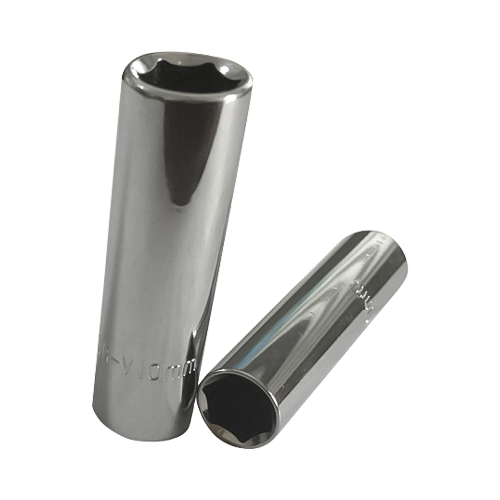
The distinction between a standard (shallow) socket and a deep socket is defined by internal depth — the distance from the drive end of the socket to the bottom of the fastener-receiving hex cavity. Standard sockets typically have an internal depth of 18–25 mm; deep sockets have an internal depth of 38–50 mm or more, providing the extended reach that makes them indispensable for automotive, plumbing, electrical, and industrial assembly work.
The Engineering Challenge of Extended Socket Depth
Extending a socket's depth without compromising its torque capacity is not trivial. As the barrel length increases, the unsupported wall section between the drive end and the hex opening increases proportionally. Under torque, this extended barrel experiences torsional stress distributed over a longer length — if the wall is too thin or the steel grade too low, the socket will twist, crack, or deform before the fastener yields.
Quality deep socket design addresses this through several engineering measures: maintaining minimum wall thickness of 3.5–5 mm through the barrel, using through-hardened chrome vanadium or chrome molybdenum steel, and maintaining tight dimensional tolerances on both the internal hex profile and the external square drive recess to ensure full engagement with the fastener and the drive tool.
6-Point vs. 12-Point Deep Sockets
Deep sockets are available in both 6-point and 12-point internal profiles, and the choice between them has practical consequences:
- 6-point deep sockets: Each of the six contact surfaces engages a flat face of the fastener rather than a corner. This distributes torque across a larger contact area, significantly reducing the risk of rounding hex fastener corners. 6-point sockets are the professional standard for deep socket work, particularly when breaking loose corroded, over-torqued, or seized fasteners where high torque is applied.
- 12-point deep sockets: The double-hex profile allows socket engagement at 30° increments rather than 60°, providing more placement positions in confined spaces where rotation angle is limited. The trade-off is that contact occurs on corners rather than flats, concentrating torque at six points and increasing fastener rounding risk when high torque is applied to worn or soft fasteners.
For general professional use, 6-point deep sockets are the recommended choice. 12-point sockets are valuable when working in very confined areas where the wider engagement angle selection is operationally necessary.
Material and Finish: Chrome Vanadium vs. Chrome Molybdenum
The two steel alloys used in quality deep socket manufacture — chrome vanadium (Cr-V) and chrome molybdenum (Cr-Mo) — offer different performance profiles suited to different application types:
- Chrome vanadium steel (Cr-V): The industry standard for hand socket sets. Achieves hardness of 55–62 HRC after heat treatment, providing excellent wear resistance for standard hex fasteners. Cr-V deep sockets are the appropriate choice for automotive, mechanical, and general maintenance use with manual or low-impact power tools.
- Chrome molybdenum steel (Cr-Mo): Higher toughness and impact resistance than Cr-V — the steel of choice for impact wrench sockets. When deep sockets are used with pneumatic or electric impact wrenches, Cr-Mo construction is essential. Standard Cr-V sockets used with impact wrenches can shatter under the high-frequency impact loading, creating a serious safety hazard. Impact-rated Cr-Mo deep sockets are always finished in black phosphate rather than chrome, as the black finish indicates impact service rating to users.
1/2" DR. Deep Drive Socket Wrench Tool: High-Torque Applications and Heavy-Duty Use
The 1/2-inch drive deep socket set is the heaviest and highest-torque configuration in the standard deep socket wrench tool range. The 1/2-inch square drive transmits torque values typically ranging from 100 to 700+ Nm — the range needed for automotive wheel bolts, suspension components, engine mounting hardware, heavy machinery fasteners, and any application where large-diameter fasteners must be driven to high specified torque values.
Why 1/2-Inch Drive Dominates Automotive and Heavy Mechanical Work
The 1/2-inch drive interface has a cross-sectional area approximately 2.6 times greater than a 3/8-inch drive square, allowing it to transmit proportionally higher torque without yielding the drive pin or rounding the drive recess. For deep socket applications specifically, the larger drive size also means the socket barrel has greater wall material available at the drive end, improving the structural rigidity of the extended barrel under high torque.
Common applications where 1/2-inch drive deep sockets are the correct tool:
- Wheel nuts and lug bolts: Typically require 100–150 Nm torque on passenger vehicles; up to 300–400 Nm on commercial vehicles. Most wheel fasteners are also recessed within the wheel's center cap recess — a classic application for deep sockets.
- Spark plugs (large engines): On diesel engines and large gasoline engines, spark plug/glow plug sockets are typically 1/2-inch drive to provide adequate torque for the required 25–40 Nm installation torque in deep plug wells.
- Suspension and chassis fasteners: Control arm bolts, subframe bolts, and steering rack mounting hardware typically require 80–200 Nm and are often located in recessed positions requiring deep socket access.
- Industrial machinery assembly: Flanged joints, motor mounting bolts, and structural fasteners on industrial equipment use M16–M30+ fasteners requiring deep sockets and high torque — exclusively in the 1/2-inch drive range.
- Plumbing and utilities: Large hex nuts on pipe unions, valve bonnets, and utility connections frequently sit recessed within pipe flanges or component bodies, requiring deep socket access at relatively high torque.
1/2-Inch Drive Deep Socket Set Composition
A comprehensive 1/2-inch drive deep socket set for professional use should cover both metric and SAE sizes across the range most commonly encountered in automotive and mechanical work. A well-specified set includes:
- Metric deep sockets: 10, 11, 12, 13, 14, 15, 16, 17, 18, 19, 21, 22, 24, 27, 30, 32 mm — covering the full range from small hex cap screws to large structural fasteners
- SAE deep sockets (imperial): 3/8", 7/16", 1/2", 9/16", 5/8", 11/16", 3/4", 13/16", 7/8", 15/16", 1", 1-1/16", 1-1/8" — for American-market vehicles and equipment
- Spark plug sockets: 16 mm and 21 mm (5/8" and 13/16") with rubber insert for grip and protection — typically included in comprehensive automotive deep socket sets
3/8" DR. Forged Deep Socket Wrench Tool: The Professional Middle-Ground Drive
The 3/8-inch drive deep socket wrench tool is the most versatile configuration in the deep socket range — capable of handling the majority of automotive and mechanical fastener sizes encountered in professional workshop work while maintaining a tool mass and socket size that allows access in tighter spaces than 1/2-inch drive tools permit. The 3/8-inch drive is the default choice for experienced mechanics who need to balance torque capability with maneuverability.
Why "Forged" Is the Critical Specification for 3/8-Inch Deep Sockets
The designation "forged deep socket" distinguishes sockets produced by forging from those produced by machining from bar stock or casting. Forging — the process of shaping heated steel under high compressive force from a die — produces a grain structure in the steel that follows the contours of the socket profile, creating a component with significantly superior mechanical properties compared to machined-from-bar equivalents.
The practical differences between forged and non-forged deep sockets are measurable and significant:
- Impact resistance: Forged steel's aligned grain structure resists crack initiation under impact loading approximately 2–3 times better than equivalent machined or cast steel. This matters for deep sockets used with impact wrenches or in sudden torque overload situations.
- Dimensional consistency: The die forging process produces more consistent wall thickness throughout the socket barrel than machining, which is critical for maintaining strength in the barrel's thinnest section — the area between the external wall and the internal hex cavity.
- Surface finish quality: Forged sockets have a denser surface layer (forging skin) that improves wear resistance of the critical hex contact faces — extending the service life of the socket's fastener-engaging surfaces.
All professional-grade 3/8-inch drive deep sockets should be forged — this is not a premium feature but a baseline quality requirement for tools that will be used in professional mechanical work where torque levels and the consequences of tool failure are significant.
3/8-Inch Drive Deep Socket Applications
The 3/8-inch drive deep socket is the right tool for the vast majority of fasteners in the 8–22 mm (or 5/16"–7/8") range encountered in automotive, motorcycle, bicycle, appliance, and general mechanical work. Specific applications where 3/8-inch drive deep sockets are particularly valuable:
- Engine compartment fasteners: Intake manifold bolts, valve cover bolts, thermostat housing nuts, and fuel rail hardware — many located in recessed positions within the engine valley that standard sockets cannot reach
- Exhaust system hardware: Oxygen sensor sockets (22 mm deep), exhaust manifold nuts seated on long studs, and catalytic converter flange bolts — classic stud-thread applications requiring deep socket engagement
- Caliper and brake hardware: Brake caliper guide pin bolts, caliper bracket bolts, and ABS sensor mounting hardware in recessed positions
- Electrical and electronics assembly: Terminal nuts, battery terminal bolts, and fuse box mounting hardware — where the 3/8-inch drive's lighter weight and smaller profile reduces the risk of accidental contact with adjacent electrical components
- HVAC and appliance servicing: Condenser mounting bolts, compressor fasteners, and cabinet hardware — often in recessed or difficult-access positions in domestic and commercial equipment
Torque Range and Drive Tool Compatibility
The 3/8-inch drive is rated for torque applications up to approximately 100–150 Nm in standard hand use with a ratchet wrench. Beyond this range — achievable with long-handled breaker bars or heavy torque wrenches — a 1/2-inch drive is the appropriate choice. The 3/8-inch drive is compatible with standard ratchet wrenches (fine-tooth ratchets of 72 teeth or more are recommended for deep socket work in confined spaces where the swing arc is limited), flex-head extensions, and torque wrenches in the 20–120 Nm range.
1/4" DR. Deep Socket Wrench Tool with Storage Box: Precision Work and Complete Set Organization
The 1/4-inch drive deep socket wrench tool is the fine-work configuration of the deep socket range — designed for small fasteners, precision components, and confined-space work where the larger 3/8-inch and 1/2-inch drives are too bulky to access or too powerful to control safely. A 1/4-inch drive deep socket set with a dedicated storage box is the tool configuration that defines a complete, organized precision socket capability — and it is the set configuration most often purchased as an introduction to professional-grade deep socket tooling.
Applications for 1/4-Inch Drive Deep Sockets
The 1/4-inch drive deep socket covers fastener sizes from approximately 4 mm to 13 mm (or 5/32" to 1/2" in SAE), the range that dominates electronics, instrumentation, small appliances, and precision mechanical assembly:
- Automotive interior and trim work: Dashboard fasteners, seat mounting screws, trim clip backing nuts, and audio system hardware — typically M5–M8 fasteners in recessed plastic housings
- Electronic equipment assembly and repair: Terminal nuts on circuit board standoffs, connector body fasteners, panel mounting hardware — where precise torque control prevents cracking of circuit boards and plastic housings
- Bicycle maintenance: Stem and handlebar bolts, derailleur mounting hardware, brake component fasteners — consistently in the M5–M8 range where 1/4-inch deep sockets provide precision control
- Plumbing fittings and small valve hardware: Compression fitting locknut tightening, small valve bonnet nuts, and instrument connection hardware in industrial process equipment
- Precision instrument and laboratory equipment: Mounting fasteners on optical equipment, measurement instruments, and laboratory apparatus — where controlled, precise torque is essential to avoid distortion of precision assemblies
The Storage Box: Why Organized Storage Is Part of the Tool's Value
The inclusion of a dedicated storage box with a 1/4-inch drive deep socket set is not simply a packaging decision — it directly affects the tool's daily usability. Deep sockets are dimensionally similar in external appearance across adjacent sizes (e.g., 6 mm and 7 mm sockets are nearly identical externally), and without organized storage, finding the correct size quickly becomes time-consuming and frustrating. A well-designed storage box for a deep socket set provides:
- Individual molded socket rails or clips: Each socket has a dedicated labeled position, making it immediately visible when a size is missing and ensuring the correct socket is selected at a glance
- Labeled size markings on the box: Both the position labels and the socket engraving should display size in mm (and SAE where applicable) — size markings should be stamped or laser-engraved, not painted, as painted markings wear off in professional use within months
- Secure lid and latch mechanism: Prevents accidental opening and loss of sockets when the box is transported — a common failure mode of budget tool boxes with friction-fit lids
- Tool roll or box integration: Premium sets include a box designed to integrate with larger tool chests or system tool cases — consistent sizing with a tool manufacturer's storage system significantly improves workshop organization
Studies of professional mechanic productivity consistently show that tool organization reduces average fastener access time by 20–40% compared to unorganized tool storage — a substantial operational benefit in high-volume workshop environments where time per vehicle repair directly determines profitability.
Drive Size Comparison: Choosing Between 1/4", 3/8", and 1/2" Deep Socket Sets
Understanding the practical differences between the three drive sizes — rather than simply defaulting to the largest available — ensures that the right tool is applied to each task, protecting both the fastener and the tool from damage caused by inappropriate force.
| Specification | 1/4" DR. Deep Socket | 3/8" DR. Deep Socket | 1/2" DR. Deep Socket |
|---|---|---|---|
| Drive Square Size | 6.35 mm (1/4") | 9.53 mm (3/8") | 12.7 mm (1/2") |
| Typical Torque Range | Up to ~25–30 Nm | Up to ~100–150 Nm | Up to ~700+ Nm |
| Fastener Size Range (metric) | 4–13 mm | 8–22 mm | 10–36 mm+ |
| Typical Internal Depth | 35–45 mm | 38–50 mm | 45–60 mm |
| Primary Material | Cr-V forged | Cr-V or Cr-Mo forged | Cr-V (hand) / Cr-Mo (impact) |
| Best Application | Electronics, precision, small fasteners | General automotive, mechanical, versatile | Wheel nuts, heavy machinery, high-torque |
| Storage Recommendation | Molded case / storage box essential | Rail, tray, or case | Metal rail or heavy-duty case |
The most practical approach for professional mechanics and serious DIY users is to own all three drive sizes. The 1/4-inch set handles precision and small fastener work; the 3/8-inch forged set covers the vast majority of automotive and mechanical work; the 1/2-inch set manages high-torque and heavy-duty fasteners. Attempting to use a 1/2-inch drive where a 1/4-inch is appropriate risks stripping small fasteners; using a 1/4-inch drive where a 1/2-inch is needed risks drive failure and incomplete fastener seating.
Quality Indicators and Buying Criteria for Deep Socket Wrench Tool Sets
The deep socket market spans an enormous quality range — from professional-grade forged Cr-V sets with lifetime warranties to budget-priced cast or poorly heat-treated alternatives that round fasteners on first use or crack under moderate torque. Identifying quality before purchase requires evaluating specific, verifiable technical criteria rather than relying on brand marketing.
Physical Quality Indicators to Check Before Purchase
- Size marking method: Professional deep sockets have size permanently stamped or laser-engraved into the socket body — not printed or painted. Hold a sample socket and look for crisp, deep size markings that will remain readable after years of use.
- Drive recess geometry: The internal square drive recess should have sharp, well-defined corners with no rounding or casting flash. Soft or poorly defined drive recesses will round under high-torque use with ratchet wrenches.
- Internal hex profile: Inspect the hex opening — it should be precisely formed with sharp 6-point geometry. Any irregularity, rounding, or flash inside the hex will cause the socket to seat imprecisely on fastener flats, reducing effective contact area and increasing rounding risk.
- Chrome finish quality: Chrome plating on hand socket sets should be bright, even, and free of pitting, blistering, or dull patches. The quality of the chrome finish correlates with the quality of the substrate preparation — pitting indicates inadequate surface preparation before plating, which may also indicate shortcuts in heat treatment and material selection.
- Wall thickness uniformity: Pick up the socket and assess weight relative to size. A socket that feels unexpectedly light for its diameter likely has thin walls — a warning sign of material substitution or inadequate wall design that will reduce torque capacity.
Specification Claims to Verify
- Steel grade: Confirm whether the set is Cr-V or Cr-Mo — the specification sheet should state the alloy. "Drop-forged" or "forged" labeling should be verifiable; ask for material certifications or DIN/ANSI/ASME compliance documentation for professional procurement.
- Hardness specification: Quality deep sockets are heat-treated to specific hardness ranges — 55–62 HRC is the accepted range for Cr-V hand sockets. Below 55 HRC, the hex walls deform; above 62 HRC, brittleness increases. Some manufacturers publish hardness test data; this is a positive quality indicator.
- Dimensional standard compliance: Deep socket dimensions should conform to DIN 3120/3124 (metric), ANSI/ASME B107.5 (inch), or ISO 1174. Compliance means the socket will fit standard fasteners precisely and will interface correctly with standard drive tools from any manufacturer.
- Warranty: Professional-grade deep socket sets from established manufacturers are sold with full lifetime warranties against defects in material and manufacture. A limited 1-year warranty or no warranty at all on a deep socket set is a strong indicator of a product not designed for professional use.
Set Size: How Many Sockets Do You Actually Need?
Large socket sets with 50+ pieces look comprehensive but often include sizes rarely encountered in practice, while the most frequently used sizes in professional work are a much smaller subset. For reference, the fastener sizes used in over 80% of automotive and mechanical work fall within:
- 1/4-inch drive deep: 5, 6, 7, 8, 9, 10, 11, 12, 13 mm — a 9-piece core metric set covers most precision fastener work
- 3/8-inch drive deep: 10, 11, 12, 13, 14, 15, 17, 19, 21, 22 mm — a 10-piece core metric set handles the majority of automotive engine and chassis work
- 1/2-inch drive deep: 14, 15, 17, 19, 21, 22, 24, 27, 30 mm — a 9-piece core covers most wheel, suspension, and heavy mechanical fasteners
A focused set of 8–12 high-quality forged deep sockets in the most common sizes outperforms a 40-piece budget set in both reliability and working efficiency. Buying quality on the sizes you use most, rather than quantity across all sizes, is the approach professional mechanics consistently advocate.
Maintenance, Care, and Safe Use of Deep Socket Wrench Tools
Deep socket wrench tools are durable, long-life tools when used correctly and maintained properly. Most premature socket failures — cracking, rounding, drive recess damage — are the result of misuse rather than material failure in a quality product. Following correct use and maintenance practices protects the tools and the fasteners they work on.
Safe Use Practices
- Never use Cr-V hand sockets with impact wrenches: This is the single most common cause of socket failure and potential injury in workshops. Always use Cr-Mo impact-rated black sockets (clearly identified by their matte black finish) with pneumatic and electric impact tools.
- Do not use damaged sockets: A cracked, chipped, or visibly deformed socket should be immediately removed from service. A compromised socket can shatter under load, projecting steel fragments at high velocity — a serious safety risk. Replace it; do not attempt to repair it.
- Ensure full engagement before applying torque: A deep socket must be fully seated on the fastener hex — partial engagement concentrates stress on fewer contact points and dramatically increases fastener rounding risk. For blind-hole fasteners reached via extensions, confirm seating by feel before applying torque.
- Use the correct drive size: Forcing a 3/8-inch drive socket with a 1/2-inch adapter to apply 1/2-inch level torque overloads the socket drive recess and the adapter. Use the appropriate drive size for the torque required — adapters are for convenience at moderate torque, not a substitute for the correct drive tool.
- Keep extensions and joints minimal: Every extension, universal joint, and wobble adapter in the drive train reduces torque efficiency and accuracy. Use the shortest practical extension for the application; long, multi-joint drive trains flex under load and produce imprecise torque application.
Maintenance and Cleaning
- Wipe deep sockets clean after use — grease and metal particles packed into the socket barrel accelerate wear on both the socket interior and the fastener hex on the next use
- Apply a light coat of tool oil to the chrome surface periodically in humid environments to prevent rust formation — particularly important for sockets stored in workshop environments with temperature fluctuations
- Inspect drive recesses periodically for rounding or deformation — a drive recess that no longer firmly retains the ratchet's drive square will slip under load; replace the socket rather than continuing to use a slipping drive connection
- Return sockets to their storage box or rail after every use — the primary cause of socket loss in professional workshops is not theft but failure to return tools to organized storage after use
Related products
-
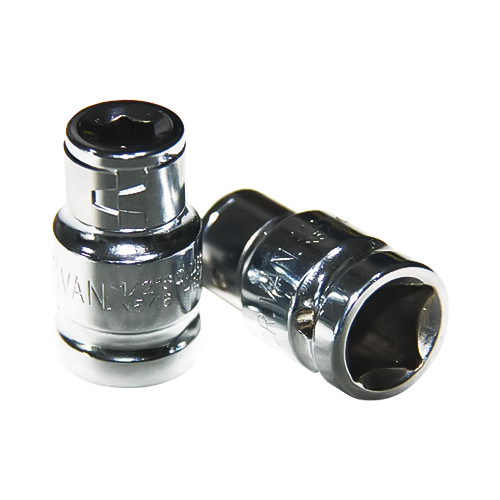
1/2”DR. SOCKET WRENCH TOOL
-
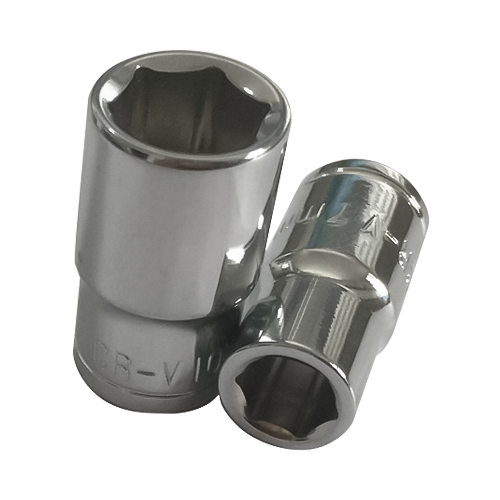
1/4"DR. UNIVERSAL SOCKET WRENCH TOOL
-
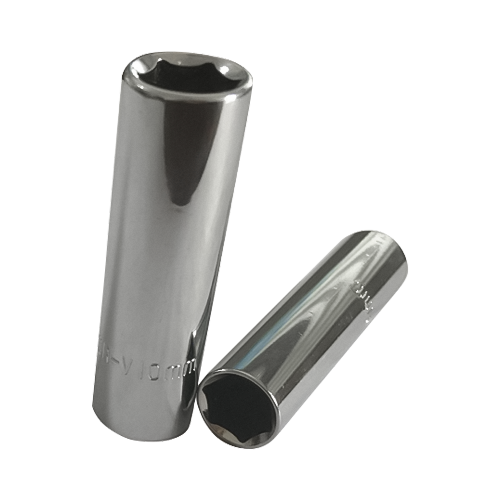
1/4"DR.DEEP SOCKET WRENCH TOOL WITH STORAGE BOX
-
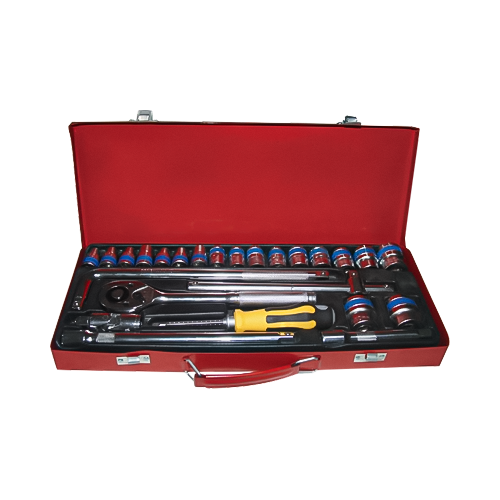
25PCS IMPACT SOCKET SET (1/2”)
-
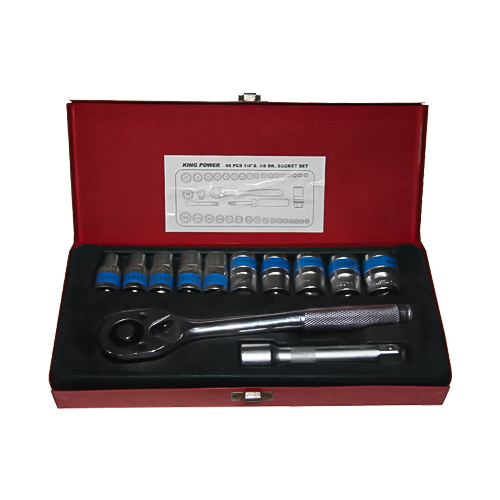
12PCS QUICK RATCHET HANDLE SOCKET SET (1/2")
-
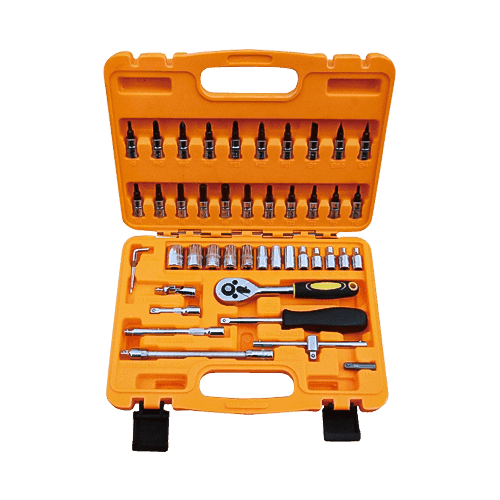
46PCS FLEXIBLE SOCKET SET (1/4")
-
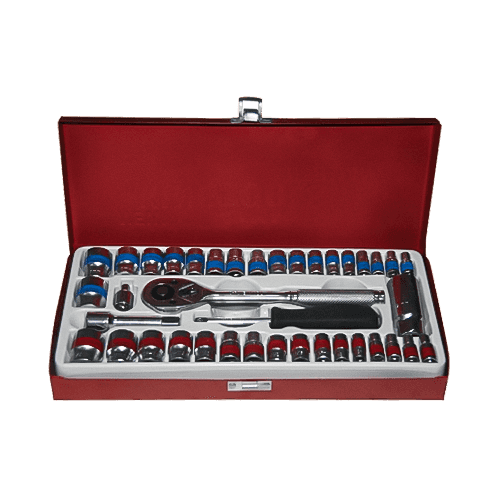
40PCS SOCKET METAL CASE SET (1/4"&3/8")
-
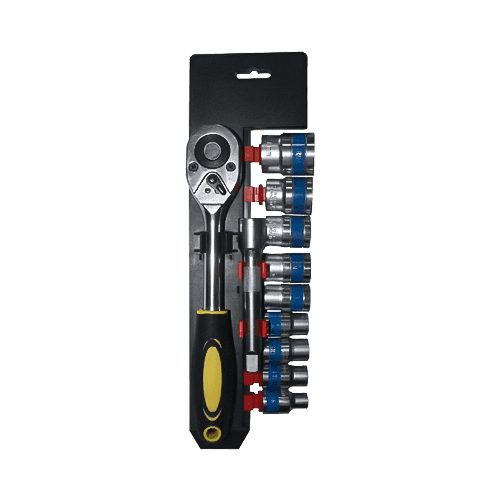
11PCS SOCKET SET (1/2")
-
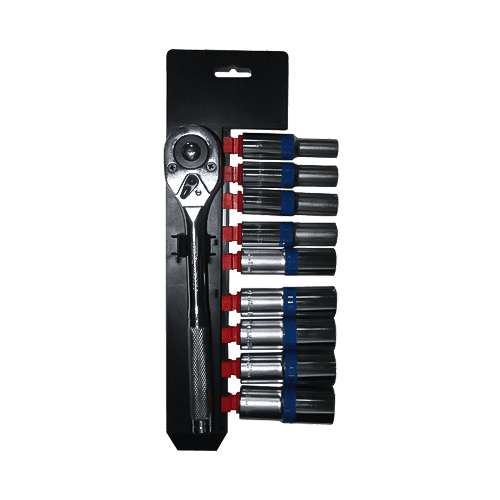
10PCS HAND DRIVE SOCKET SET (1/2")
-
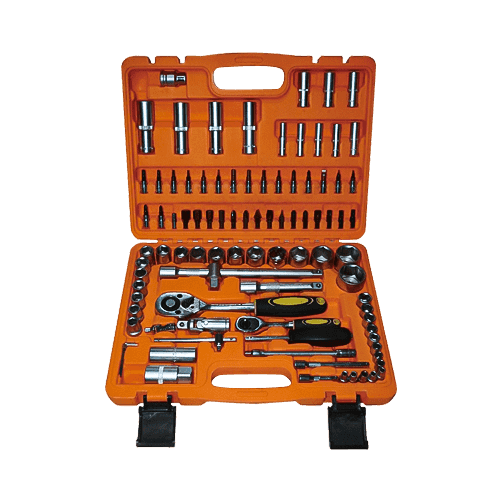
94PCS GENERAL MAINTENANCE SOCKET SET (1/4"&1/2")
-
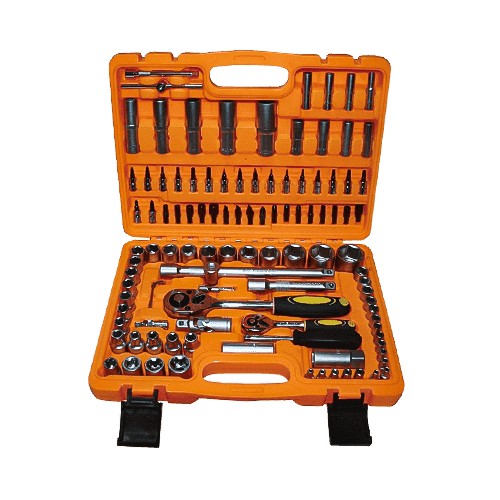
108PCS SOCKET SET (1/4"&1/2")
-
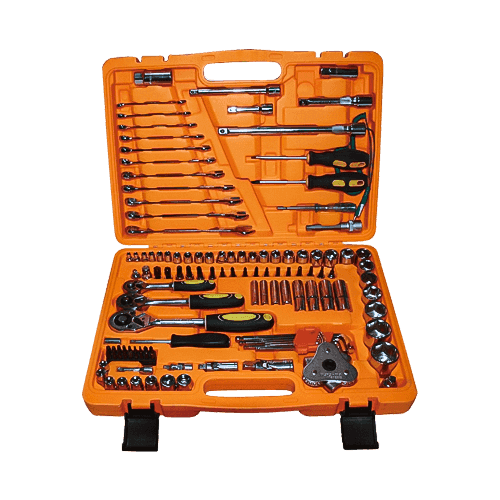
121PCS COMPLETE SOCKET SET (1/4"&1/2"&3/8")
 +86 137 360 111 56
 Lianxing Village, Dongguan Street, Shangyu District, Shaoxing City, Zhejiang Province